
Everything You Need to Know Before Buying Moringa Seeds
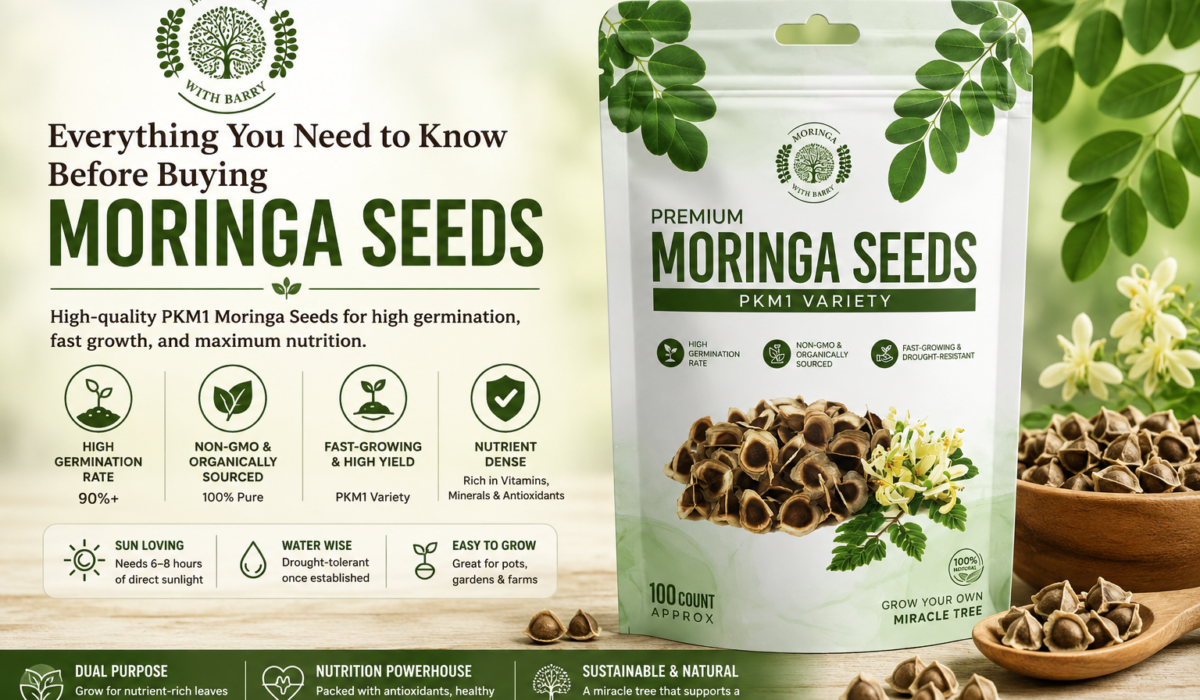
Known around the globe as the “Miracle Tree,” Moringa oleifera has surged in popularity thanks to its exceptional nutritional profile and incredible fast-growing nature. Whether you want to cultivate a leafy superfood garden in your backyard, plant drought-resistant trees on a farm, or simply enjoy the health benefits of eating edible seeds, starting with high-quality seeds is the most crucial step.
However, not all moringa seeds on the market offer the same germination rates, purity, or yield. Before hitting “Add to Cart,” here is everything you need to know to ensure you choose the best moringa seeds for your specific goals.
1. Choose the Right Variety: Why PKM1 is the Gold Standard
When browsing for seeds, you will likely encounter different varieties and wild strains. For the vast majority of growers and health enthusiasts, the PKM1 variety is hands-down the top choice.
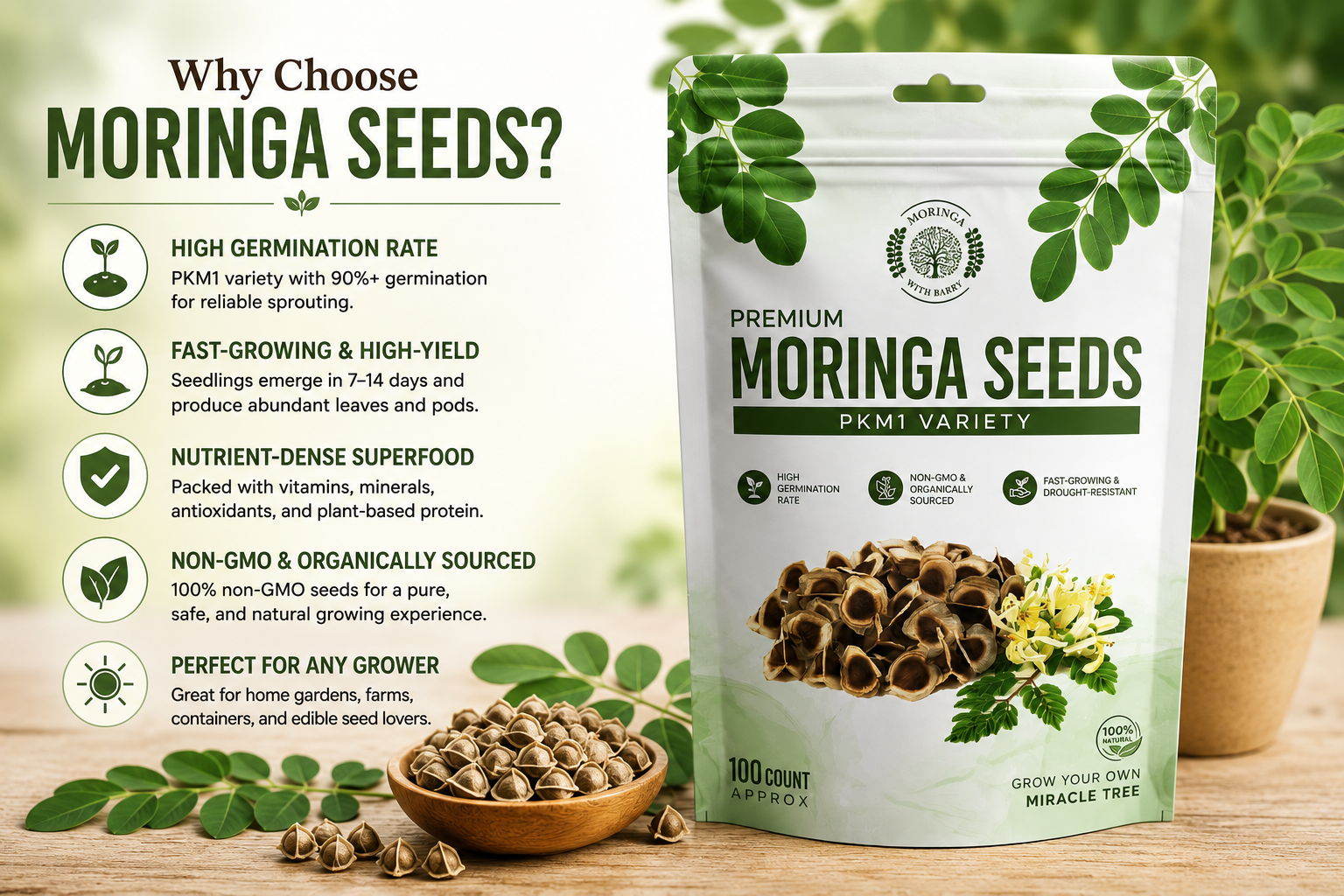
- Higher Germination Rates: PKM1 seeds are specifically cultivated for reliable sprouting (often exceeding 90% under warm conditions).
- Faster Growth: Seedlings emerge within 7–14 days and establish rapidly.
- Abundant Leaf Yield: Bred to produce significantly more leaves and pods per plant compared to wild varieties.
- Nutrient Density: Leaves from PKM1 trees are packed with essential vitamins, minerals, and plant-based protein.
2. Check for Non-GMO and Sustainable Sourcing
Seed quality directly impacts tree health and safety if you plan to consume the leaves or seeds. Always verify that the supplier offers:
- 100% Non-GMO Seeds: Bred through traditional agricultural techniques without artificial genetic modification.
- Organically Sourced Practice: Free from harsh chemical treatments that can damage seed viability or compromise purity.
- Fresh Packaging: Seeds should come in moisture-sealed or resealable pouches to protect seed viability during storage and shipping.
3. Understand Your Intended Use: Planting vs. Eating
Did you know moringa seeds are dual-purpose? Knowing how you intend to use them helps determine how many bags to order:
For Gardening & Farming
Growing your own tree gives you an endless supply of fresh moringa leaves. Moringa trees are remarkably drought-tolerant once established and thrive in warm, sunny environments (USDA Zones 9–11). Even if you live in a colder climate, you can easily grow moringa in large containers and bring them indoors during winter.
As an Edible Superfood Snack
Moringa seeds themselves are 100% edible! They have a unique, slightly sweet, and nutty flavor profile.
- Raw or Roasted: You can peel the outer hull and eat the kernel raw, or lightly roast them for a crunchy snack.
- Packed with Antioxidants: They contain powerful compounds like quercetin and chlorogenic acid, alongside healthy monounsaturated fats that support immunity and daily energy.
4. How Much Should You Buy?
Seed quantities usually depend on your space and growing goals:
- Starter Pack (~100 Seeds / 1 Bag): Perfect for beginners, small container setups, or trying out edible seeds for the first time.
- Grower’s Pack (3 Bags): Ideal for medium backyard gardens, hedgerows, or continuous planting cycles.
- Bulk / Family Pack (5+ Bags): Best suited for homesteads, larger farm plots, or sharing with fellow gardeners.
5. Quick Planting Tips for Success
Once your seeds arrive, follow these simple steps to get the best germination results:
- Soak: Soak your seeds in fresh water overnight (around 12 hours) to soften the outer shell.
- Plant: Sow seeds 1 inch deep in warm, well-draining potting soil.
- Sun & Water: Place the pot in a sunny location and water lightly daily to keep the soil moist but not waterlogged.
- Sprout: Expect sprouts to emerge in 7 to 14 days!
Build Your Complete Moringa Routine
Growing trees from seed is just one way to bring the power of Moringa oleifera into your life. You can combine seed growing with other pure moringa essentials:
- High-Yield Seeds: Order certified Premium PKM1 Moringa Seeds to get started today.
- Culinary Guide: Learn exact roasting and preparation methods in our detailed guide on How to Eat Moringa Seeds.
- Skincare & Haircare: Experience the benefits of pressed seeds directly on your skin with Cold-Pressed Moringa Seed Oil.
- Skip the Germination Phase: Start instantly with fully established Live Moringa Plants.
- Landscape Planning: Read our garden guide on Are Moringa Tree Roots Invasive? before planting in-ground.
- Concentrated Wellness: Try liquid daily leaf support with Moringa LiverPurify Cleanse Support Extract.
Scientific Research & Botanical Safety
To read official research on Moringa oleifera health benefits, dietary safety, and botanical studies, visit the National Center for Complementary and Integrative Health (NCCIH).
People Ask For Moringa Seeds
When stored in a cool, dark, and dry place inside sealed packaging, high-quality moringa seeds remain viable for germination for up to 1–2 years.
Yes! As long as the plant receives adequate sunlight (or a grow light) and warmth, moringa can be grown in containers indoors, especially during colder months.
If eating seeds for wellness, start small with 1–2 peeled kernels per day to see how your stomach adjusts before gradually increasing.